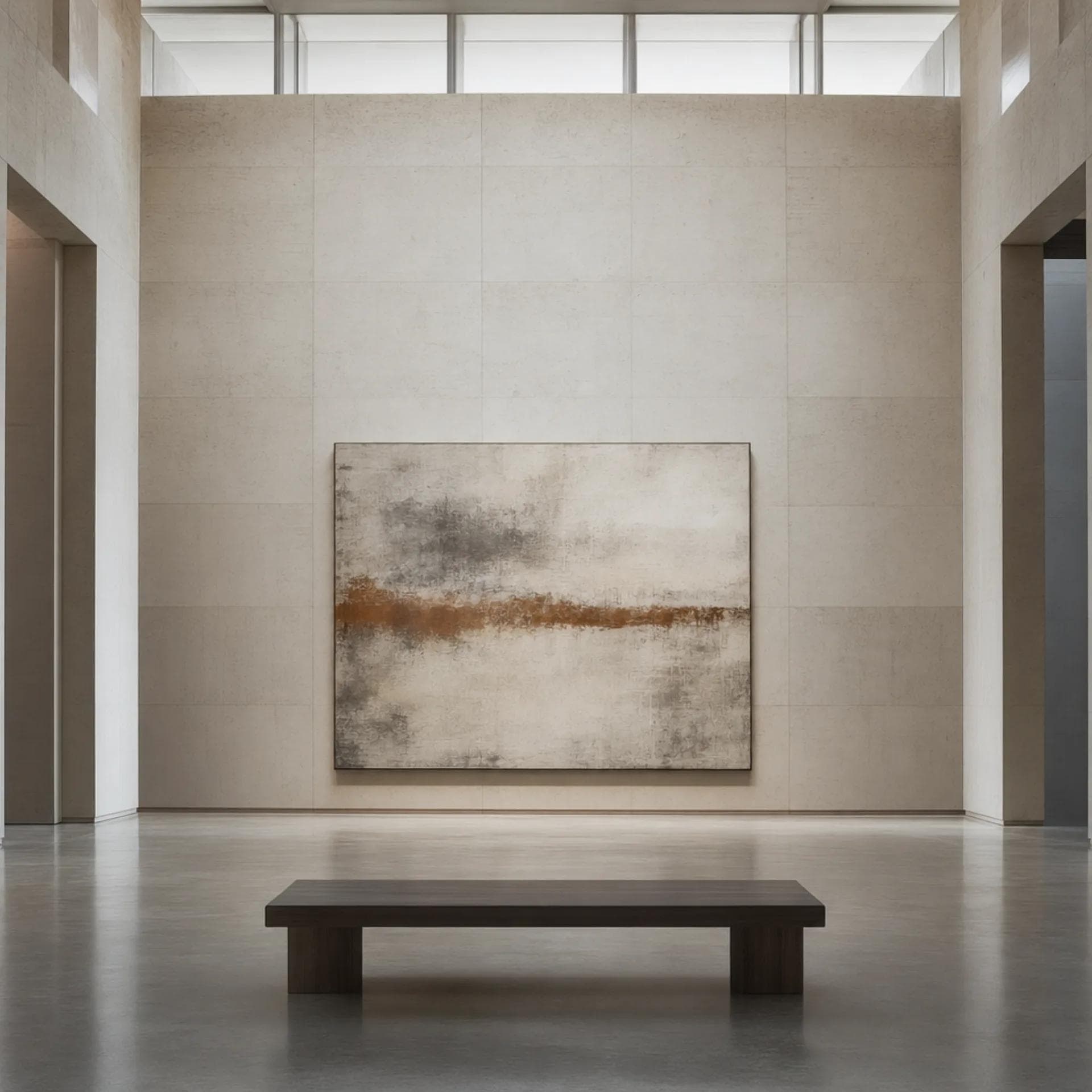
Hauser & Wirth confirmed in mid-September that its Greek Riviera site, located on twelve acres of land outside the village of Kardamyli in the southern Peloponnese, will open in May 2026. The site will operate six exhibition spaces, a year-round residency program for approximately twelve artists at a time, and a small associated farm-to-table program with restaurant operations modeled on the gallery's Somerset location. The total investment is, per multiple sources, in the range of €72 to €90 million across land acquisition, construction, residency-housing, and operational reserve. The opening exhibition program has not been publicly announced.
We spent two days in Kardamyli in late September and one additional day with the gallery's leadership in Zurich to understand the strategic logic of the move. The site is a significant commercial bet for Hauser & Wirth. It is also the most ambitious destination-gallery development in the international art market in the past decade, surpassing in scale and operational complexity the gallery's existing rural sites at Somerset, Menorca, and Bruton. The bet rests on three propositions, each of which is contestable on its own and which together define the strategic question the rest of the gallery world will be watching.
The bet rests on three propositions, each of which is contestable on its own and which together define the strategic question the rest of the gallery world will be watching.
What is being built
The site sits approximately ninety minutes by car from the regional airport at Kalamata, which is itself a one-hour flight from Athens. The drive from Kalamata to Kardamyli runs along the Mani peninsula coast on roads that are good but not fast, a fact the gallery's leadership did not dispute when we asked. The remoteness is intentional. The Hauser & Wirth model, refined across the existing rural sites, is built on the proposition that an art experience on a remote site that requires deliberate travel produces a higher-quality engagement than an art experience in an urban gallery that the visitor walks into incidentally. The model has been validated commercially at Somerset, where average visitor stays now exceed six hours and where approximately forty percent of visitors are non-British and traveled to Somerset specifically for the gallery.
The six exhibition spaces are arranged across two purpose-built structures and three converted agricultural buildings that predate the site's acquisition. Total exhibition square-footage is approximately 4,200 square meters, which is larger than Somerset and approximately twice the exhibition footprint of the gallery's Menorca site. The residency-housing structure accommodates twelve artists with associated studio space and is designed for year-round operation. The farm-to-table program will operate from the converted central building and will source approximately seventy percent of produce from on-site or adjacent agricultural relationships, per the gallery's published plan. The restaurant will not be open to non-visitors; it operates on the same model as Somerset's Roth Bar & Grill, which serves gallery visitors and residency artists exclusively.
The strategic propositions
First, the gallery is betting that the Hauser & Wirth Somerset and Menorca model scales internationally. Somerset has been operating since 2014 and has, by independent reporting, become commercially profitable on a standalone basis. Menorca, which opened in 2021 and is smaller, is approaching commercial profitability on a longer time horizon than the gallery anticipated at opening. The Kardamyli site is, in operational terms, more ambitious than either. The square footage is larger, the operational complexity (residency program plus exhibition program plus restaurant program) is higher, and the geographic remoteness is greater. The gallery's leadership is confident the model holds at this scale. The rest of the gallery world is, on background, less confident; we spoke with leadership at three peer galleries who have considered similar destination-site investments and declined, citing the operational complexity Hauser & Wirth is now committing to manage.
Second, the gallery is betting that the southern Peloponnese is the next phase of the international destination-gallery movement. The geographic logic is that the Aman Costa Navarino and the Costa Navarino resort complex, thirty kilometers north, have established the broader region as a destination-luxury market for international UHNW travel. The gallery's leadership cited specific demographic data from the Costa Navarino occupancy reports as supporting evidence for the bet. The data is real but is not, on its own, dispositive; what matters for the gallery model is whether the visitor demographic actually engages with art as part of the visit, and that engagement is harder to project than occupancy levels at adjacent luxury hotels.
The residency program as commercial mechanism
The third proposition is the most operationally important and the least discussed in the gallery's public communications. The residency program at Kardamyli will host approximately twelve artists at any time, on residency terms ranging from two months to twelve months. The residencies are not curated by the existing gallery program in the way most peer-gallery residencies are. They are operated as a parallel program with semi-independent curatorial direction, and the residency artists are not, in most cases, gallery-represented artists. This is a significant departure from how most major-gallery residencies operate.
The reason, per the gallery leadership we spoke with on background, is that the Kardamyli site requires year-round programming to justify its scale, and the existing gallery roster cannot supply year-round programming without exhausting the touring schedule of the represented artists. The residency program supplies the programming gap by producing exhibition-ready work from the residency artists themselves, with the gallery taking a representational option on selected residency outputs as part of the residency framework. The model, in commercial terms, is the gallery using a residency program to generate inventory it can subsequently exhibit and sell, on terms more favorable to the gallery than would be possible through standard gallery-artist relationships. The model is innovative. It is also, by some measures, controversial in the artist-side of the market.
The model, in commercial terms, is the gallery using a residency program to generate inventory it can subsequently exhibit and sell. It is innovative. It is also, by some measures, controversial.
Why now
The timing is the question that the gallery's leadership did not address directly. The international art market has softened materially in the past three years, with auction-house volumes down, primary-gallery sales down, and emerging-market collector activity reduced from the post-2020 peak. The gallery's leadership characterized the market environment as 'a return to normal' rather than as a contraction. The Kardamyli investment, on a softening-market read, is countercyclical. On a return-to-normal read, it is well-timed. The reading the rest of the gallery world adopts will depend on whether the Kardamyli site's first three years of operation produce the visitor numbers and the commercial outputs that the gallery's leadership currently projects.
The opening exhibition program will be announced in February 2026. The gallery's existing roster suggests the opening artists will include some combination of Mark Bradford, Rashid Johnson, Mira Schendel (estate), and one or more of the residency artists from the program's first cohort, which has been quietly active since spring 2025. The gallery has not confirmed any of these. We will report what is announced when it is announced. The site is, regardless of opening lineup, the most significant gallery infrastructure addition of the year.
Further reading: our analysis of Aman's strategic positioning in Tokyo for the parallel destination-luxury thesis, the Bryant Art vertical for ongoing primary-market and gallery intelligence, and our Destinations vertical for hospitality coverage adjacent to the Kardamyli site. The Bryant editorial standards on art coverage are described on our About page; for daily primary-market and gallery-move intelligence, subscribe to Bryant Premium for The Bryant Memo.