
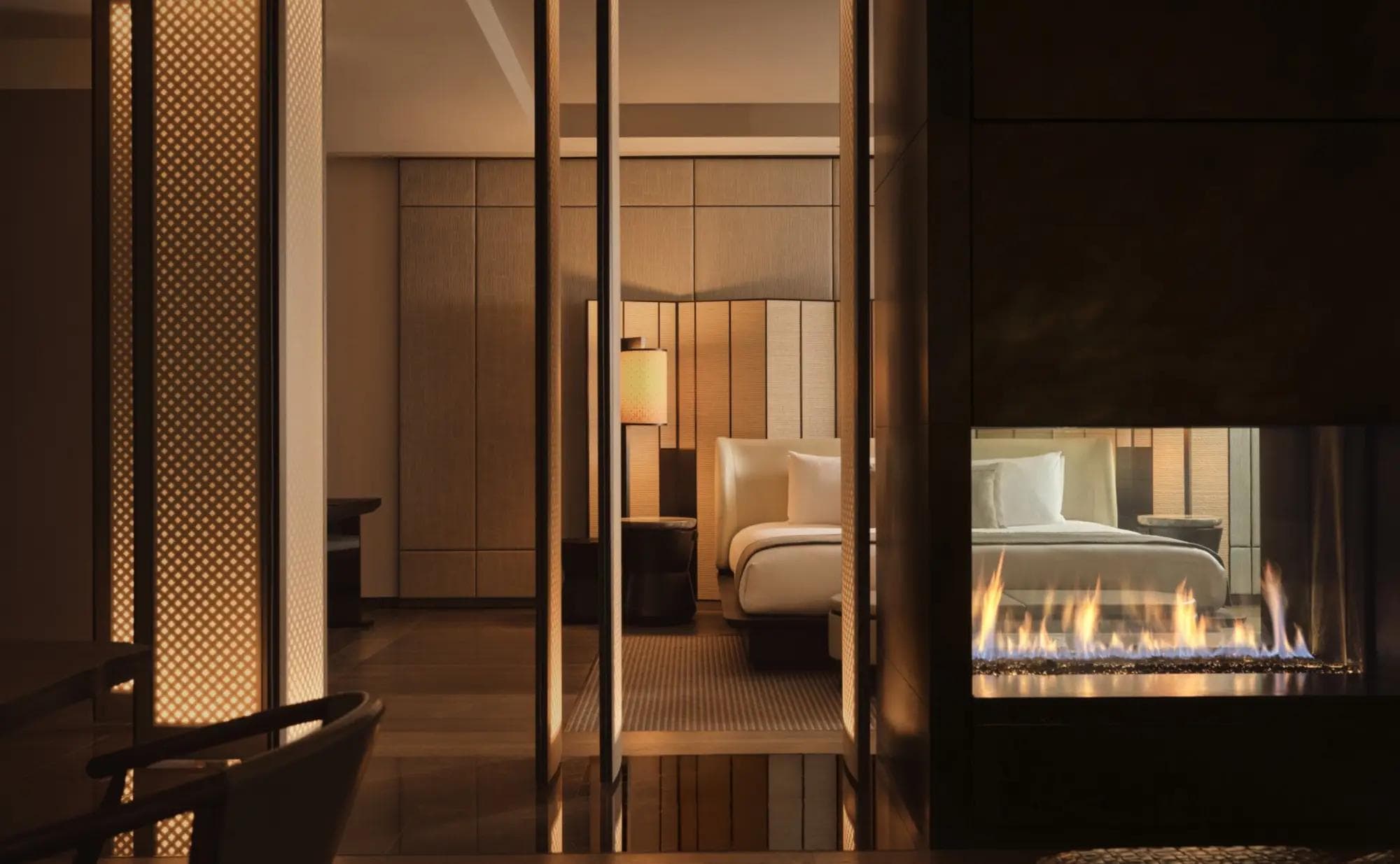
Aman opened the Aman Club New York in 2023 at a $200,000 joining fee and $15,000 annual dues, making it the most expensive private members' club in the city. Three years later, the model has become the dominant new-build format in ultra-luxury hospitality. Aman Miami Beach opens its members club in late 2026. Aman Beverly Hills follows in 2027. Rosewood added Carlyle & Co. to its New York property in 2024. Soho House's Ned chain has expanded to three full hotel-and-club properties (NoMad, London, Doha). The Twenty Two opened a New York outpost alongside its London property earlier this year. Sterling's Club Naples opens late 2026 inside the Carnelian Hotel with 70,000 square feet and a wine cellar valued above one million dollars.
The trade press has been calling the trend a "hotel-club convergence." That framing misses the structural point.
The hybrid is not a new product category. It is a structural reorganization of how the ultra-wealthy organize their travel, social, and signalling lives in 2026. The interesting question is not whether hotels are adding membership tiers or members' clubs are adding hotel rooms. It is what that bidirectional convergence says about a wealthy class whose primary signalling currency has shifted from assets to access.
What is actually opening and what it costs
The Aman tier is the verifiable ceiling. The other brands have not all published joining-fee structures in a directly-citable form, which itself tells you something about the segment: pricing is often deliberately opaque because membership scarcity is part of the product.
Three structural observations. The Aman tier ($200K join, $15K dues, publicly disclosed) is the ceiling. Other brands cluster below it at meaningful multiples of separation. The price stratification mirrors the existing hotel pricing hierarchy. What is new is that hospitality groups across multiple tiers have added members-only components into their offering bundle.
Two: every brand on the list has either added members-only to existing hotel infrastructure (Aman, Rosewood, Four Seasons) or added hotel rooms to existing members-only infrastructure (Soho House, The Twenty Two, Sterling's). The convergence is bidirectional. That tells you the hybrid is not a product-category extension. It is a structural reorganisation of how the ultra-luxury hospitality consumer is being served.
Three: the price stratification across tiers creates a defined hierarchy of access. The market has stratified into discrete bands separated by significant multiples of joining cost.

Why hybrid, and why now
Three things appear to be driving the convergence.
One: the hotel guest with high repeat behavior is the highest-margin segment in ultra-luxury hospitality. Adding a members-only tier creates a soft contractual relationship with those guests, formalises the loyalty without requiring the brand to operate a points programme, and captures upfront capital that smooths revenue volatility. The Aman Club's $200K joining fee is explicitly designed to capture that customer.
Two: the members-only club model can hit a structural growth ceiling without hotels. Soho House has publicly discussed the value of adding hotel rooms to Ned properties for members. Members use the hotel rooms (for themselves, for guests, for one-night stays after late dinners), which strengthens the club's value proposition without diluting it. The Twenty Two's New York opening alongside its London property reflects the same observation: members already book travel to other cities where their brand has presence, and the hotel-club combination captures more of that spend. RLA Global's Q1 2026 industry brief frames the trend at the operator level.
Three: the post-2022 ultra-wealth migration changed the geography of the buyer pool. UHNW relocations from London to Dubai, from New York to Miami, from Hong Kong to Singapore have all created portable demand for hospitality brands that maintain consistent service standards across markets. A multi-city members-only club aligned with a hotel brand is structurally well-positioned for that buyer. Aman's club expansion (NY, then Miami, then Beverly Hills) is the cleanest example. The same buyer pool is reshaping the branded-residence boom Bryant has tracked separately.
What the hybrid says about how the ultra-wealthy organise life
The interesting question is not the business model. It is the consumer-behaviour signal.
The 1990s ultra-wealth model was geographic: a primary house, a vacation house, a few hotel relationships, occasional first-class flights. The 2010s model was experiential: trophy hotels, trophy yachts, trophy events. The 2026 model that the hotel-club hybrid reflects is membership-based: portable, recurring, identity-anchored, and signalled through the institutional layer (which clubs you belong to) rather than the asset layer (what you own).
The signalling intensity has migrated from the asset to the access. The Aman Club New York joining list is more selective than the Bel Air buyer pool.
That shift maps to three deeper structural changes. The decline of the trophy asset as the dominant wealth signal. A $400M Bel Air estate is still a wealth signal, but the day-to-day signalling work is increasingly done by who lets you sit at their table for breakfast. The Aman Club New York joining list is more selective than the Bel Air buyer pool. The signalling intensity has migrated from the asset to the access.
The need for portable identity in a post-2022 wealth-mobility environment. UHNW principals are no longer single-jurisdiction residents. They have addresses in three or four cities, none of which fully serve as "home." The members-only club provides a portable institutional identity that travels with them. Aman New York, Aman Miami, Aman Beverly Hills all mean the same thing to the member.
The consolidation of the broader luxury vocabulary into a smaller set of institutional brands. Twenty years ago, the ultra-luxury hotel category had dozens of names worth tracking. In 2026, the institutional brand list that actually moves UHNW behaviour is meaningfully shorter (Aman, Rosewood, Four Seasons, Mandarin Oriental, Ritz-Carlton Reserve, Bulgari, Cheval Blanc, Soneva, Soho House, Core Club, The Twenty Two). The hybrid format consolidates the consumer's relationship within a smaller set of institutional brands, which is what UHNW principals appear to want.

What changes for principals over the next 12 months
Three things to track.
The Aman Miami Beach Club opening in late 2026. The opening price card (expected at the Aman ceiling tier) will test Miami-specific demand. If joining sells out quickly, the Aman tier is structurally sound and the model scales further. A slower fill rate indicates a softer ceiling.
The Soho House Ned expansion. Soho House has signalled additional Ned properties in the 24 months ahead. The Ned tier's track record in driving member F&B and reducing churn (when Soho House publishes operating metrics) will validate or refute the accessible-luxury hybrid thesis.
The Four Seasons Private Residence Club. Four Seasons has been moving toward branded-residence-plus-membership bundles. The Bryant Four Seasons Red Sea piece flagged the structural shift toward branded residences. The Private Residence Club is the natural product extension: own a branded-residence apartment, get an automatic membership tier across the Four Seasons hotel network. This is the model that may scale fastest because it bundles the asset purchase with the membership into a single transaction. The same buyer cohort that is paying for hotel-club access is also booking Cannes Film Festival villa-plus-yacht packages. The wealthy class is increasingly choosing portable, recurring, identity-anchored consumption over one-off experience.
The hotel-club hybrid is not a passing trend. It is the dominant new-build format in ultra-luxury hospitality for the foreseeable build cycle. For principals positioning their own hospitality consumption, the institutional decision in 2026 is not which hotel to choose. It is which membership relationship to enter. More in Destinations.