
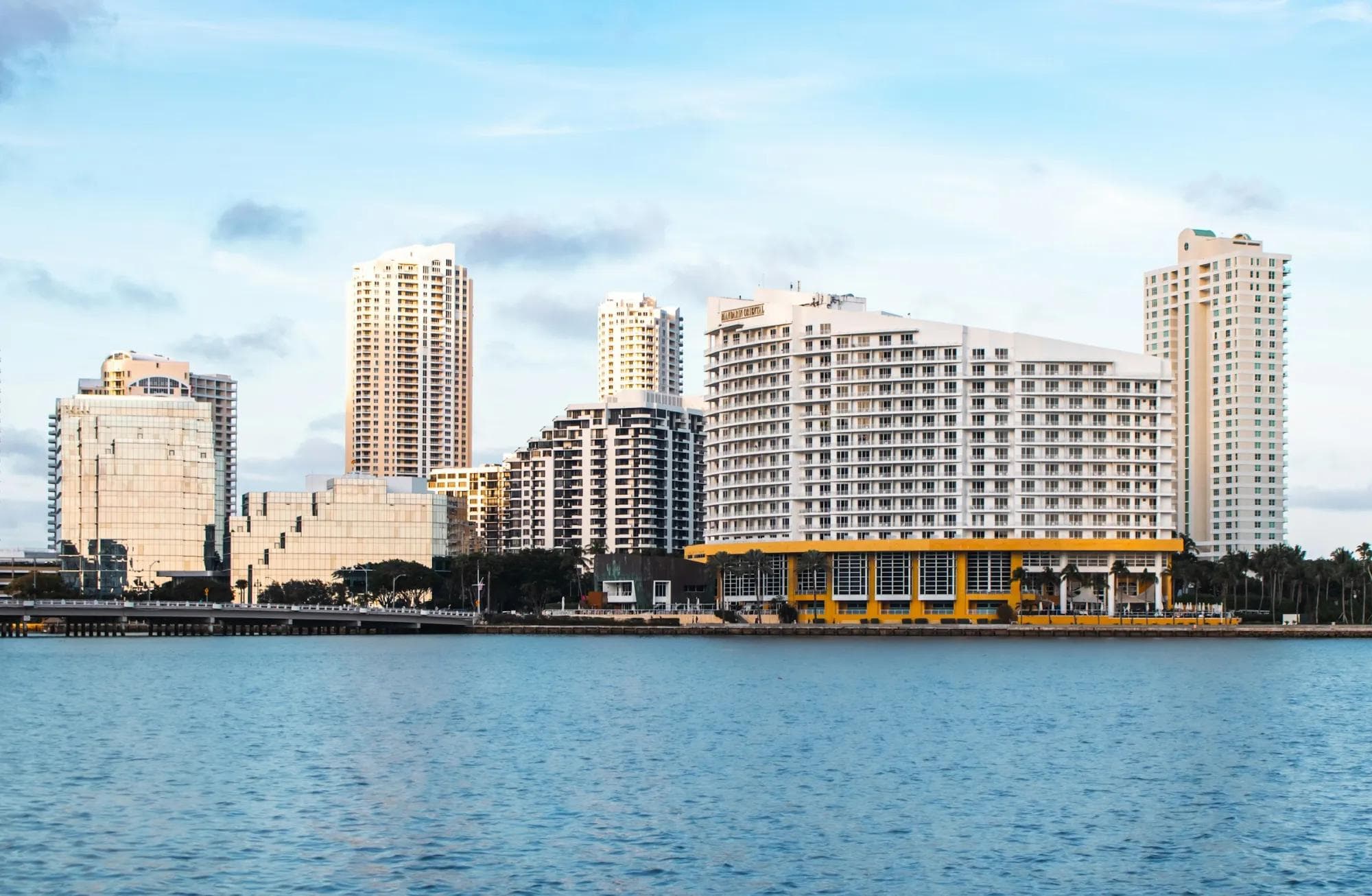
Mandarin Oriental Miami sold two penthouses at 49.9 million dollars each in March 2026, roughly 6,300 dollars per square foot, the highest price ever paid for a condominium on mainland Miami. The two units sit atop the 66 story South Tower at One Island Drive on Brickell Key, the gated island Swire Properties has been master planning since it bought most of the land in 1979. Each penthouse runs close to 8,000 square feet across five bedrooms, with a private rooftop lap pool. The buyers closed before a single floor of the tower exists. Groundbreaking is not expected until late 2026, and the building will not deliver until 2030.
The transaction landed in a market that, by every broad measure, had turned against sellers. Swire Properties, the Hong Kong listed developer behind the project, and its incoming president Dave Martin called the sales a new benchmark for ultra luxury living. That framing is correct on the number and incomplete on the meaning. The mainland Miami record did not get set by the Miami market. It got set in spite of it.
The reflex read is that a 100 million dollar penthouse pair proves Miami luxury real estate is roaring. The data says the opposite. Miami's broad luxury condo market closed 2025 as a buyer's market, with inventory running near twice the balanced level and days on market climbing. The Mandarin Oriental result is not evidence that the tide is rising. It is evidence that branded scarcity at the very top has decoupled from the market beneath it, and that decoupling is the entire investment case for the asset class.
The mainland Miami record did not get set by the Miami market. It got set in spite of it.
What does 6,300 dollars per square foot buy on Brickell Key
The first thing to separate is the brand from the building. A buyer paying 6,300 dollars per square foot on Brickell Key is not paying for square footage. The same island's existing inventory, eleven older condo towers Swire built across four decades, trades at a fraction of that figure. The premium is for the Mandarin Oriental name, the hotel services that attach to it, and the position at the southern tip of a private island inside a city whose financial district is two minutes away by car.
Branded residences command that premium consistently and globally. Savills, in its 2025/26 branded residences report, puts the worldwide average premium at 33 percent over comparable non branded stock, rising to 39 percent in resort locations. Knight Frank frames the band slightly wider, at 20 to 35 percent above non branded peers, with stronger resale and rental performance attached. The sector itself is expanding fast. Savills counted roughly 910 branded schemes globally by the end of 2025, up 19 percent in a single year from 764, and nearly triple the 323 that existed in 2015.
Miami is where those premiums run hottest. The reason is structural. The broad market gives a buyer one set of economics. The branded tier gives a different set, and the gap between them is widening rather than closing.
Why the broad Miami market is not the comparison
Here is the market the Mandarin Oriental result is usually compared against, and why the comparison fails. The Miami luxury condo segment finished 2025 at a record average of 1,030 dollars per square foot, but the year over year gain was only 4.5 percent, and the headline masks a soft underlying market. In the fourth quarter of 2025, closed luxury condo sales fell 7.8 percent year over year to 330, average price per square foot was 1,011 dollars, and inventory sat at 23 months, well above the 9 to 12 months that defines a balanced market. Days on market rose 28 percent to 91. CondoBlackBook's read was unambiguous: Miami's luxury condo market closed 2025 as a buyer's market, with buyers holding the leading edge in negotiations.
A penthouse clearing 6,300 dollars per square foot in that environment is not the broad market doing well. It is roughly six times the citywide luxury average, and it transacted while the rest of the segment was discounting. The two facts only reconcile if the trophy branded tier is a separate market with separate demand, which is precisely the thesis a buyer at that price is underwriting. The pattern is not unique to Miami. The same top end resilience over a softening middle is the story playing out in the Hamptons, where the trophy tier and the broad market have pulled apart into what amounts to two separate markets.
How the Mandarin Oriental number compares to its real peers
The honest comparison is not Mandarin Oriental against the Miami median. It is Mandarin Oriental against the other branded trophy towers competing for the same buyer. On that basis the figure still stands out.
On a price per square foot basis the gap is stark. Mandarin Oriental cleared near 6,300 dollars. Cipriani Residences in Brickell set its own record at roughly 3,333 dollars on a 16.2 million dollar penthouse. The broad Miami two million dollar plus condo segment averaged near 1,445 dollars in the third quarter of 2025. The Aston Martin Residences downtown record, a 23 million dollar sky penthouse in December 2024, was not disclosed on a per foot basis, so it is left out rather than estimated.

Cipriani's first penthouse sale, at 16.2 million dollars and roughly 3,333 dollars per square foot, was itself a Brickell record when it closed, and Cipriani Residences has since topped out at 872 feet to become the tallest residential tower south of Manhattan. Mandarin Oriental nearly doubled that per square foot figure. The Aston Martin Residences Sky penthouse, at 23 million dollars in December 2024, set the prior downtown Miami ceiling. Mandarin Oriental's penthouse pair cleared more than twice that absolute number. The branded tier is not one market. It is a ladder, and Brickell Key just claimed the top rung.
What the brand conveys, and what it does not
The services are real and they are the product. Mandarin Oriental's residential platform attaches hotel grade housekeeping, in residence dining, spa access, and a managed amenity deck. At One Island Drive the podium is planned at roughly 100,000 square feet, anchored by multiple pools and a Mandarin Oriental spa, while the North Tower is positioned as the brand's North American flagship hotel with 121 keys. Interiors come from Parisian designer Tristan Auer, architecture from Kohn Pedersen Fox. For a lock and leave buyer who is in Miami six weeks a year, that platform is the asset. It is what a non branded Class A tower, however well finished, cannot replicate.

What the brand does not convey is immunity from the economics of the island itself, and this is where the diligence gets sharper. In May 2026, existing Brickell Key condo owners sued Swire over a 32 million dollar assessment tied to a seawall and baywalk program, alleging a calculated scheme to shift infrastructure costs. The same developer setting a mainland price record is in active litigation with the island's existing residents over who funds the seawall that keeps the island habitable. A branded penthouse does not sit above that question. It sits inside it. The convening power of the brand and the long term carrying economics of the island are two different underwrites, and a buyer at 6,300 dollars per square foot is taking both.
Does the premium hold on resale
This is the question that matters once the brand premium is paid, and the honest answer is that the public evidence is favorable but not yet specific to this building. Branded residences have historically held their premium on the secondary market better than non branded stock. The Savills and Knight Frank data point to persistent resale premiums and higher rental yields for branded product, which is the structural case for paying the markup in the first place.
But the Mandarin Oriental tower does not deliver until 2030, and the two record penthouses were bought on plan, years before a resale market can exist. The relevant precedent is the broader branded cohort, not a comparable unit in the same building, because there is not yet a comparable unit. The 6,300 dollar per square foot mark is a primary sale benchmark. Whether it survives as a resale floor will not be testable until the building exists and trades, and any buyer treating the primary number as a guaranteed resale floor is extrapolating beyond what the data supports.
The cleaner way to read the transaction is this. Two buyers paid a mainland record to own the top of a branded island tower, in a soft broad market, half a decade before delivery. They were not buying the Miami condo market. They were buying out of it, into a tier that prices on scarcity and a name rather than on the citywide tape. For family offices weighing trophy property against other hard assets, that distinction is the whole decision. The branded trophy tier is a different instrument from the broad luxury market that surrounds it, and the Mandarin Oriental sale is the cleanest 2026 illustration of how far the two have separated.
That separation is visible across the wider trophy economy, not only in real estate. The same buyer pool that absorbs a 100 million dollar penthouse pair is the pool bidding at collector car auctions and reshaping how the rarest assets clear. Brickell Key is one expression of it. The branded residence model that now stretches toward 100 million dollar trophy units is another. The signal in both is the same: at the very top, scarcity and brand are doing the pricing, and the broad market is no longer the reference.
The Mandarin Oriental result, read correctly, is not a Miami story. It is a branded scarcity story that happened to print on Brickell Key.
The bottom line for buyers
The 6,300 dollar per square foot mark is real, verifiable, and a genuine mainland record. It is also a primary sale number in a soft broad market, set five years before delivery and untested on resale. The right way to size it is as a scarcity instrument priced on a name, not as a read on Miami. The Bryant Real Estate desk tracks the branded trophy tier transaction by transaction. The full Real Estate coverage holds the running record.