
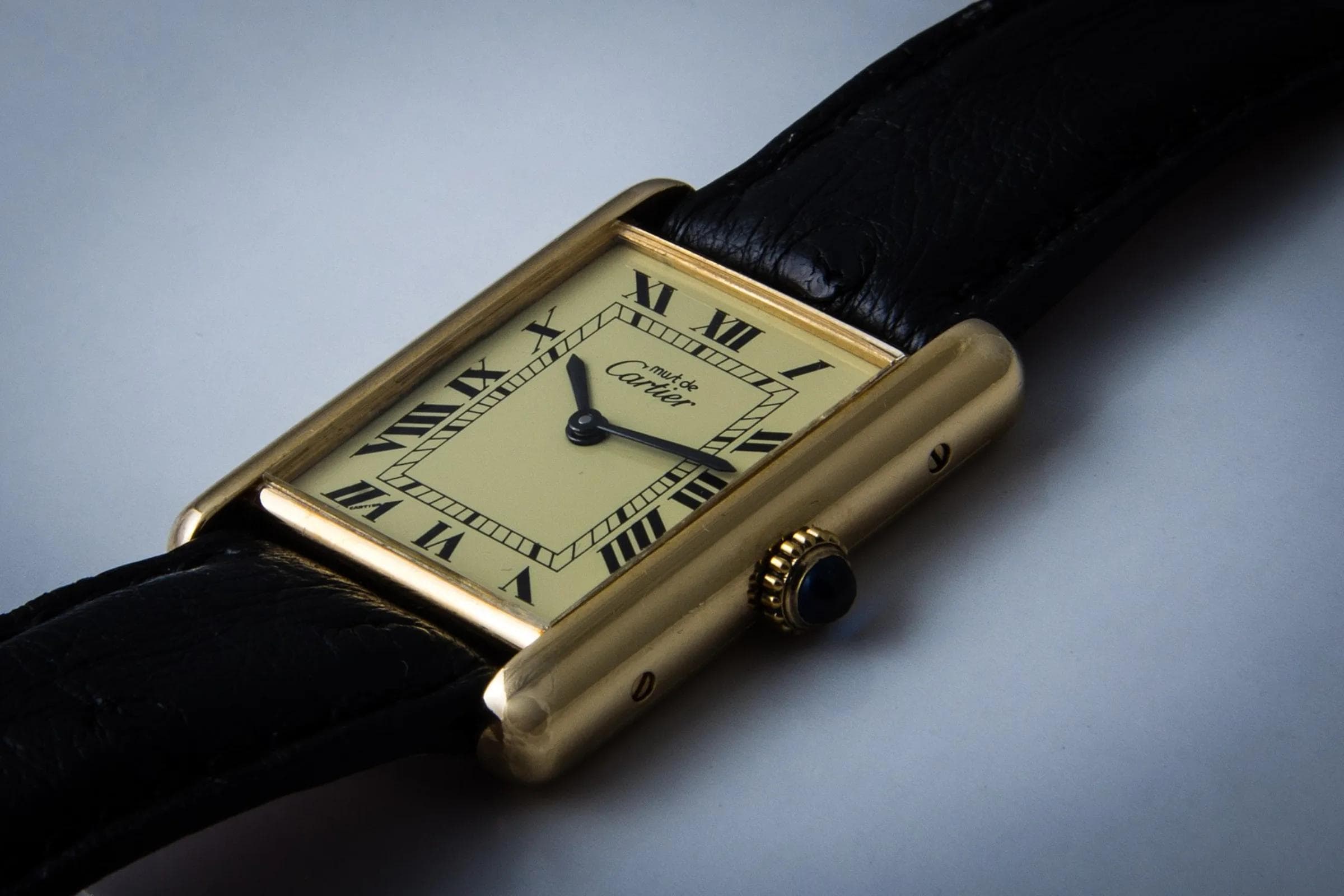
Cartier walked into Watches and Wonders Geneva in April 2026 not as the jeweler that also sells watches, but as the second largest Swiss watch brand in the world by turnover. The ninth annual Morgan Stanley and LuxeConsult Swiss watch report, published in the weeks before the salon, placed Cartier behind only Rolex and ahead of both Patek Philippe and Audemars Piguet, two houses whose waitlists have defined collector status for a decade. At the show, the headline release was a platinum skeleton version of the Crash, the most distorted shape Cartier has ever put into series, limited to 150 numbered pieces. The brand that built its case on accessibility opened the year with its most extreme object.
The trade reaction split along predictable lines. Collector forums framed the ranking as an accounting artifact, the product of a quartz Tank Must counted alongside grand complications. Cartier's defenders read it as overdue recognition that shaped watches, not dive bezels, are where the market is moving. Morgan Stanley itself called Cartier the listed outlier, the one large brand inside a publicly traded group whose trajectory bends up while the field flattens.
The reflex read is that Cartier bought the ranking with volume, that a 3,150 franc steel quartz Tank Must inflated a number that high horology earns the hard way. That read is mostly wrong. The number is real, the units behind it are real, and the strategy that produced it is the one thing the steel-sports majors structurally cannot copy. Cartier is winning by being legible to people who are not watch people, and the secondary market has only just started to price what that is worth.
Cartier is winning by being legible to people who are not watch people, and the market has only just started to price what that is worth.
How big is Cartier in Swiss watchmaking now?
Morgan Stanley and LuxeConsult estimate Cartier watch sales at 3,488 million francs for 2025, an 8.7 percent share of a wholesale market they size at roughly 25.9 billion francs. That puts Cartier second only to Rolex, which the same report credits with more than 11 billion francs in wholesale sales and a share close to 33 percent. The report counts roughly 695,000 units behind Cartier's figure, against Rolex volumes of about 1.1 million. Cartier sits ahead of Patek Philippe and Audemars Piguet on turnover. Omega, which held the second position for years, has seen its share erode from about 9 percent in 2017 to 6.4 percent in 2025, dropping it to fifth by turnover.
The trajectory is the part that matters. Cartier held a 5.7 percent share in 2019. Reaching 8.7 percent in 2025 is a gain of roughly 300 basis points over six years, in a market that contracted 1.7 percent in value terms last year for its second consecutive annual decline. Cartier did not grow into a rising tide. It took share while the water dropped.
The structural context sharpens it. The four largest privately owned brands, Rolex, Patek Philippe, Audemars Piguet and Richard Mille, command 49.1 percent of the entire Swiss watch market by value in 2025, up 2.2 percentage points year over year. Cartier is the one large brand outside that private cluster gaining ground on it, and the only billion-franc name on the list that sells a serious watch for the price of a weekend.
Why does a readable watch beat a scarce one?
The steel-sports model rests on a single mechanism: constrain supply, let the waitlist do the marketing, and let the secondary market advertise the premium. It works until it does not. The same Morgan Stanley report records Rolex volumes falling for two consecutive years for the first time in over two decades, and the broad secondary market has spent two years unwinding the 2021 to 2022 froth. Scarcity is a powerful engine when demand is climbing and a liability when it is not.
Cartier runs the opposite play. Its entry point is a 3,150 franc steel quartz Tank Must, a watch a first-time buyer can walk in and purchase, sized and shaped identically to pieces that cost ten or twenty times more. The design is the constant; the price ladder runs underneath it. A buyer does not need to know what a column-wheel chronograph is to recognize a Tank. That legibility is real power, and it tracks across the wider category the Bryant Watches desk follows.

That readability is also a hedge. A brand whose demand is broad and aesthetic rather than narrow and speculative is less exposed when the speculative tier corrects. It is the same divergence playing out one rung up the price ladder at the steel-sports houses, where the 2026 Rolex price increase pulled away from a softening secondary market, and where allocation has become its own asset class in the Patek Cubitus rollout. Cartier is playing a different game on the same board.
What does the Cartier Crash record tell us?
The clearest signal that the market is repricing Cartier did not come from a boutique. It came from a saleroom. In April 2026, a 1987 Cartier Crash, one of only three made in London that year, sold at Sotheby's in Hong Kong for 15.6 million Hong Kong dollars, roughly 1.99 million US dollars, after a nine-minute bidding war. The pre-sale estimate had been 3.2 to 6 million Hong Kong dollars, or about 400,000 to 800,000 dollars. The result became the most valuable Cartier wristwatch ever sold at auction, eclipsing the previous record of 1.65 million dollars set in 2022.

A single auction result is one data point, not a trend, and it should be read as such. What it confirms is narrower and more useful than a market-wide claim: at the very top of the shaped-watch category, Cartier now clears prices that put it in the same conversation as the independents and the rarest vintage Patek. The record is for a 1980s London Crash, not a current-production piece, so it speaks to vintage scarcity rather than retail demand. But it lands in the same year Cartier reached number two by turnover, and the two facts point the same direction.
The pattern is not confined to watches. The same buyer pool repricing rare shaped Cartier is the pool bidding records at collector car auctions, the flight to the rarest, most legible objects when the broad market is uncertain. Auction houses publish their results in full; the Phillips, Christie's and Sotheby's watch departments are the public record to watch for whether current-production Cartier follows the vintage Crash up the ladder, or whether the record stays a vintage story.
Is Cartier's price strategy sustainable?
Cartier raised retail prices roughly 6 percent across its core collections in early 2026, a single-digit move that trade coverage characterized as calculated moderation. That is a meaningful contrast with the steel-sports houses, where price increases have run ahead of inflation and ahead of resale support. A 6 percent increase on a 3,150 franc Tank Must keeps the entry point inside reach of the buyer who makes the volume work; a comparable increase on a steel sports watch widens the gap between retail and a secondary market that may not follow.
The discipline is the strategy. Cartier's volume base depends on the entry tier staying accessible, and its high-horology halo, the Prive skeletons and the platinum complications shown at Watches and Wonders Geneva 2026, depends on the brand reading as serious. Holding both at once is the balancing act. Public secondary-market trackers such as WatchCharts and Chrono24 are the data sources to watch for whether the entry-tier premium holds as the increases compound, because that premium is what separates a brand that took share from one that merely discounted into it.
What does the number two ranking mean for buyers?
Read correctly, the ranking is not a trophy. It is a statement about where watch demand is going. Three things follow from it. The shaped-watch category, dismissed for years as fashion rather than horology, now carries the second largest Swiss watch brand by value. The accessibility play, long treated as the opposite of collectibility, has produced both volume and an auction record in the same year. And the steel-sports premium, the dominant collector frame since 2015, is no longer the only path to the top of the table.
For a buyer, the practical read is that Cartier is no longer a hedge against not getting a Rolex. It is a category with its own logic, its own price ladder, and its own emerging secondary market, anchored at the bottom by a 3,150 franc Tank Must and at the top by a two million dollar Crash. Whether the middle of that ladder, the current-production Tank, Santos and Panthere in steel and gold, holds value the way the extremes have is the open question, and the public auction and index data will answer it before any boutique does. The full Bryant Watches coverage tracks where shaped design sits against the steel-sports majors as the table reshuffles.
Cartier did not climb to second by out-scarcing the houses built on scarcity. It climbed by being the watch a person can recognize without being told why it matters. In a market that spent two years unwinding the premium on watches that needed explaining, that turned out to be the more durable position.