
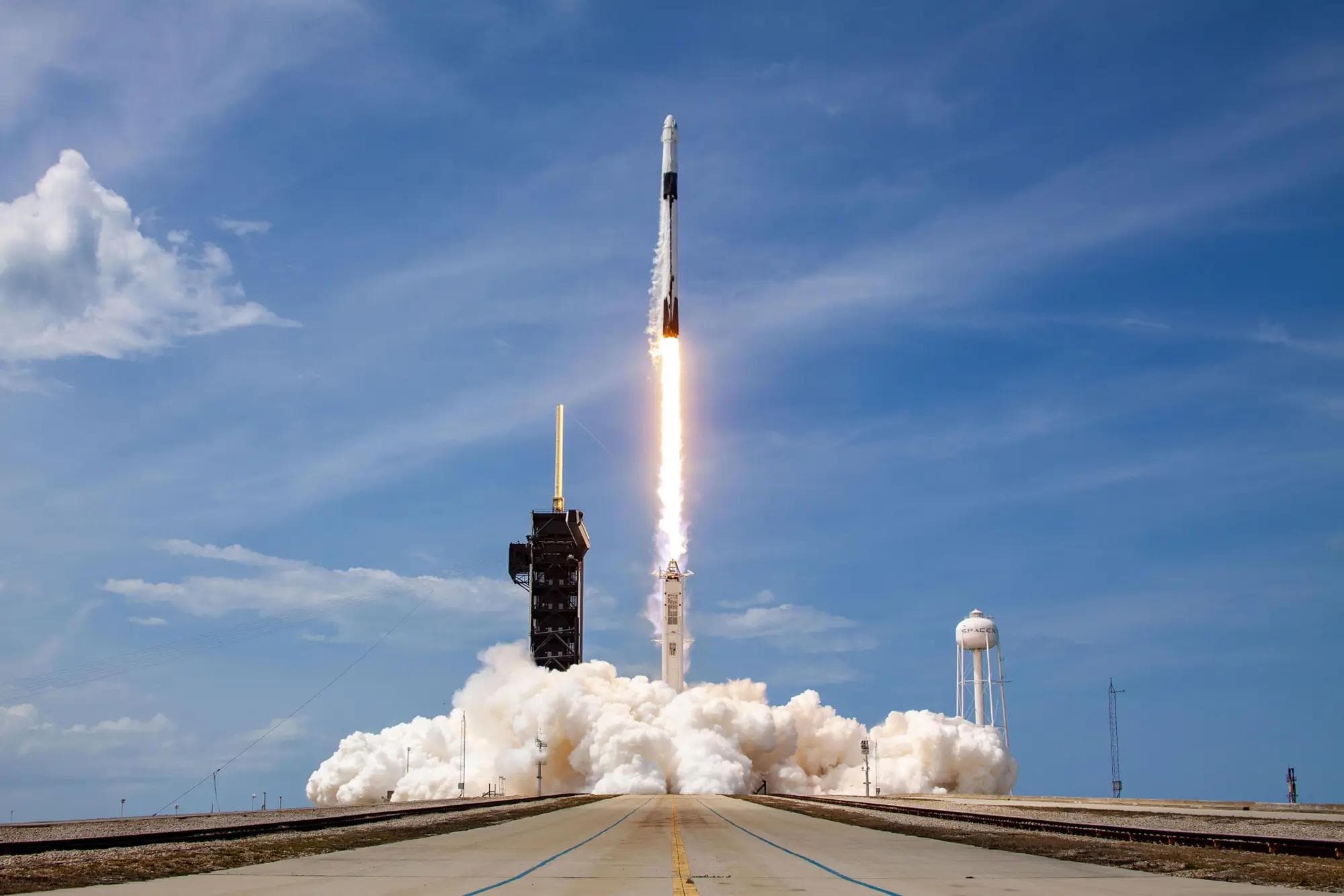
SpaceX is scheduled to begin trading on Nasdaq on Friday, June 12, under the ticker SPCX, with pricing set the prior Thursday evening. The Morgan Stanley-led syndicate, joined by Goldman Sachs, JPMorgan, Bank of America, and Citigroup, will price the deal at an expected $75 billion raise against a $1.75 trillion implied valuation. That works out to roughly 109 to 116 times trailing revenue on the company's $18.67 billion of 2025 sales, 58 to 65 times forward 2026 revenue, and roughly three times the size of Saudi Aramco's 2019 print. Elon Musk, already the world's wealthiest individual, is positioned to become the first dollar-trillionaire on the open.
The wires have been writing about the trillionaire. That is not the story principals need to read.
The story is what June 12 actually does to the secondary market that has been pricing SpaceX privately for the last four years, what the 85.1% Musk super-voting share class signals about how SPCX will be allowed to trade once it is public, and which family offices and pre-IPO holders need a 90-day plan in place before the standard 180-day lockup expires on December 9.
The SpaceX IPO mechanics in three dates
Two operational reads here. In the roadshow window leading up to pricing, the pre-IPO secondary desks at Forge Global, EquityZen, and the bank-internal cross-trades typically thin out as institutional accounts wait for the public open. Family offices and high-net-worth allocators who hold SpaceX shares through those venues lose meaningful sell-side optionality in the days right before the IPO. Anyone planning to lighten ahead of the open had to be done before the roadshow window opened.
The lockup expiry on December 9 is the single most important post-IPO date for the stock. Standard lockup expiries on large tech IPOs historically generate downward pressure as insiders and pre-IPO investors are first allowed to sell. On a $1.75 trillion cap, the dollar magnitude of insider supply at expiry will be substantial. Any "buy at the open" thesis needs to factor that catalyst into the six-month horizon.

Why SpaceX's $1.75 trillion valuation is not the surprising number
The valuation is not the news. Pre-IPO secondary marks on SpaceX have been printing in roughly the same range as the IPO band for months. The trade press tracking Forge Global composite quotes and EquityZen auction settlements through 2026 has reported transaction marks broadly consistent with the public-market valuation. The IPO is not pricing the company higher than the secondary market already had.
The news is the multiple. At 109 to 116 times trailing revenue and 58 to 65 times forward 2026 revenue, SPCX prices well above the major listed Big Tech comparables. The bull case is straightforward: Starlink, with more than 10 million subscribers and $1.19 billion of segment profit in Q4 2025, is undervalued on a connectivity-utility multiple, and SpaceX's dominant share of global commercial launches is operating leverage that has not begun to monetise. The bear case is the $4.9 billion net loss on $18.67 billion of revenue and a capex profile that the public market typically penalises.
The S-1 will surface risk factors that retail buyers have not had to think about before. Starship-program ramp dependency, Starlink fleet replacement economics over multi-year cycles, and FCC spectrum-licensing exposure are all elements the analyst base will model into post-IPO targets. Read the filing risk-factors section in full before sizing a position.
What changes for pre-IPO holders on June 12
Three different positions exist among private-wealth SpaceX holders. The reallocation problem is different for each.
Position one: holders through Forge Global, EquityZen, or single-investor SPVs. The decision is whether to trigger US capital gains by selling into the IPO (or in the post-IPO market subject to the SPV's own lockup, which may or may not match the standard 180-day window) or hold for the Starship monetisation thesis. The SPV-by-SPV lockup terms are the key variable and almost never match the underwriter-imposed lockup. The mechanics here track the broader principle Bryant has covered before in the context of Gulfstream G700 slot transfers: private-market liquidity windows compress before public reference prices arrive.
Position two: holders through Tiger Global, Founders Fund, Sequoia, or other late-stage growth funds. The fund-level decision dominates here. Late-stage venture funds typically face LP pressure to crystallise marks within a defined window after a public listing. Expect concentrated insider supply at the lockup expiry on December 9. Position accordingly.
Position three: family offices that bought directly via SpaceX-issued private placements between 2020 and 2024. These holders typically have direct-with-SpaceX lockup arrangements that pre-date and may exceed the underwriter-imposed schedule. For these positions the IPO is not a liquidity event. It is a valuation event for the wealth-management report.
For all three, the post-IPO portfolio question is the same. SpaceX exposure goes from venture mark to public mark overnight. Pre-IPO it sat in the alternatives bucket. Post-IPO it sits in the public-equity bucket and the wealth manager has to either rebalance against the rest of public equity or re-classify it as a strategic concentration. That rebalance decision is what creates the first wave of secondary supply.
The super-voting share trap for institutional allocators
Musk retains 85.1% voting control. SPCX shareholders get one vote per share. The institutional buyer base for SPCX is narrower than the cap size implies.
Musk retains 85.1% voting control through a super-voting share class. SPCX shareholders get one vote per share. Musk's Class B shares get effective control of all governance decisions.
Two things that means in practice. One: SPCX may not qualify for full S&P 500 weighting under the index's existing governance posture on dual-class structures. The 2017 Snap IPO was the precedent that forced S&P to revisit dual-class admission rules. To the extent passive index demand is the largest marginal buyer at this market cap, governance structure narrows the passive buyer base.
Two: pension funds and sovereign wealth allocators with explicit governance screens face a real diligence step before sizing a SPCX position. The institutional buyer base for SPCX is narrower than the cap-size alone implies. Expect retail and hedge-fund demand to do disproportionately heavy lifting on day one. Bryant has covered the same dynamic from the asset-side in the Bombardier Global 7500 secondary market, where governance and ownership structure shape who can clear the trade.

Is this a market top signal?
The IPO market is heating up. OpenAI has publicly signalled an eventual IPO. The trade press has been writing about Anthropic's path to public markets. Three of the most-watched private tech assets in the world clearing into public markets inside the same window is the kind of pattern that gets retroactively cited as a peak.
The honest read is that the S-1 timing reflects the underwriters' read of risk appetite, not the underlying business. SpaceX could have gone public earlier. The fact that the deal team is doing it now means they believe risk appetite is at a high. That does not make it a market top, but it does mean retail and high-net-worth buyers should treat the open price as the underwriter's best estimate of what the market will absorb, not as a discount.
The capital allocation implications extend beyond the stock itself. Newly liquid SpaceX shareholders need places to park gains, and that creates a 12-to-24-month rotation into trophy real estate (the $400 million Bel Air listing is the new ceiling) and into hard-asset diversification plays that the broader Bryant Aviation coverage has tracked, including fractional jet ownership.
For Bryant readers, the practical takeaway is simpler. If you already hold SpaceX privately, the IPO is a portfolio-reclassification event that needs a 90-day plan. If you do not hold privately, the SPCX open is a six-month trade against a December 9 lockup catalyst, not a long-term allocation. Treat it accordingly. More in Aviation.