
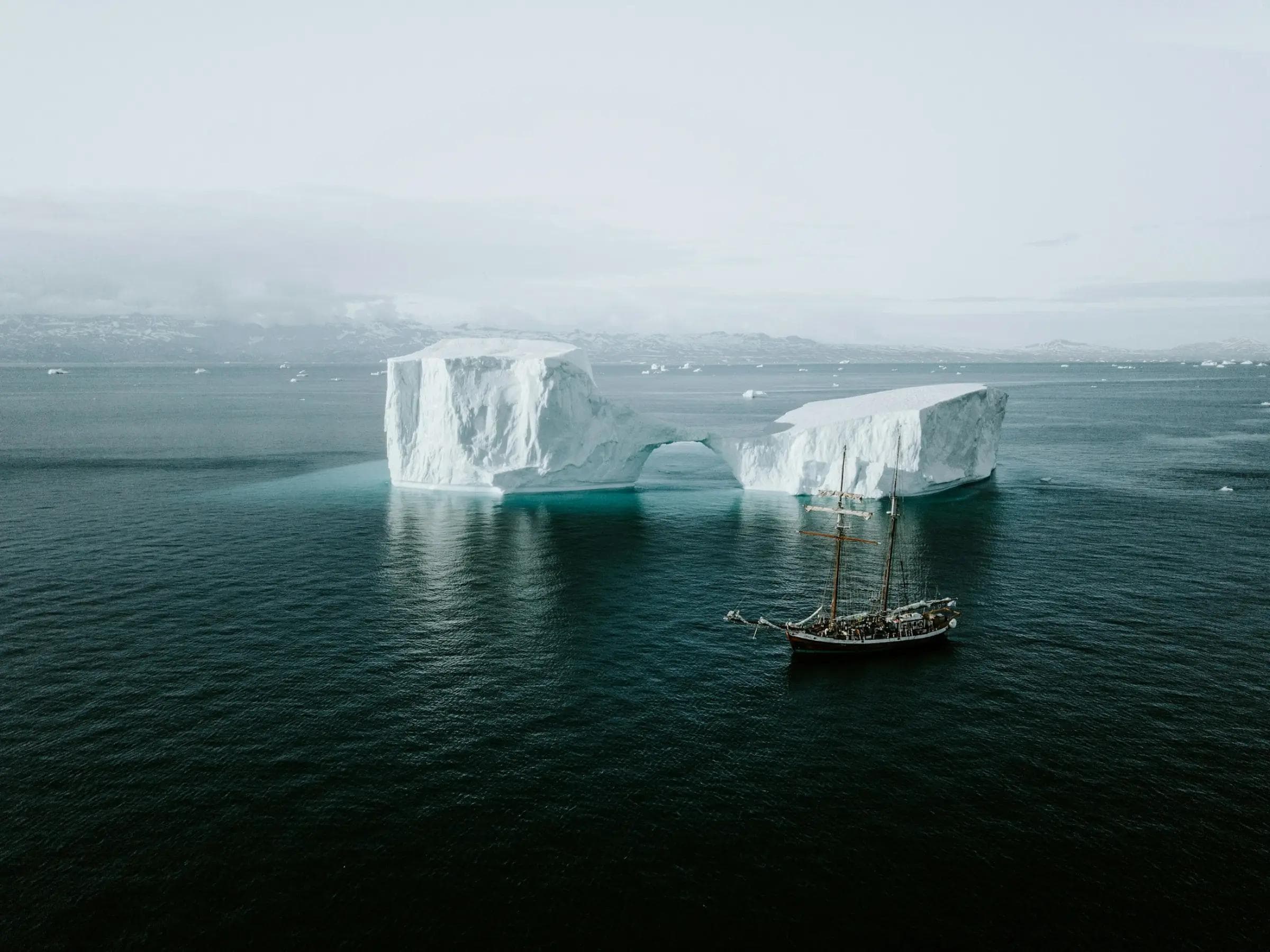
Damen Yachting delivered its first 60 metre Xplorer, a hybrid, ice strengthened expedition hull named After You, in June 2025, then put a second of the same model into build for delivery in May 2026. In the same window the 110 metre Lürssen O3, a steel hulled, ice strengthened explorer laid down in 2018 and reshaped by Espen Øino from 2022, ran sea trials in the North Sea ahead of a first quarter 2026 handover. Two yards at opposite ends of the size scale, both shipping go anywhere hulls into a market that, by unit count, is shrinking.
The shrinkage is real. BOAT International's 2026 Global Order Book records 1,093 yachts of 24 metres and above on order or in build, down from 1,138 the prior year and the second consecutive annual decline by unit count, per the published order book. Inside that smaller book the hull mix has moved. The breakdown runs 837 motor yachts, 101 explorers, 69 sailing yachts, 63 open boats, and 23 sportfish. Explorer has consolidated as the second largest single category at roughly nine percent of the order book, behind only the conventional motor yacht.
The reflex read is that explorer yachts are a niche for adventurous billionaires who want to reach Antarctica. That read is too small. The category is taking share because the asset itself has changed what it is for. An explorer hull is not a themed motor yacht with a tougher paint job. It is a longer range, more autonomous, more private instrument, and the owner class is buying that capability faster than it is buying conventional displacement volume. The order book is not just smaller. It is reweighting toward the boats that go where the others cannot.
The order book is not just smaller. It is reweighting toward the boats that go where the others cannot.
What actually counts as an explorer yacht
Start with the definition, because the word gets used loosely. BOAT International's own explorer briefing sets the floor: the minimum range for a true explorer yacht is 5,400 nautical miles at a cruising speed of no less than 10 to 12 knots, per the event's technical framing. Steel hulls dominate for strength in remote water, ice class ratings run from the milder Polar Class 7 up to year round Polar Class 1, and autonomy from shore is the design brief rather than an afterthought. The 90 metre Lürssen Ice cited in that same briefing carries a 6,000 nautical mile range at 15 knots.
Two facts follow from that definition, and both cut against the billionaire-niche assumption. The first is size. Roughly 70 percent of explorer yachts sit between 24 and 40 metres, which means the category is not a handful of 100 metre polar ships. It is a broad band of mid-sized, long-range hulls that a far larger pool of buyers can actually order. The second is that the defining feature is range and autonomy, not ice. A boat that can cross an ocean without bunkering and sit at anchor for weeks is an explorer whether or not it ever sees a glacier.
Why the share is rising while the book is shrinking
The order book contracting and explorer share rising at the same time is the data point worth sitting with. It is not that owners stopped buying yachts. It is that within a smaller pool of orders, a larger fraction is going to capability rather than to conventional volume. Three forces are doing the reweighting.
The first is the wealth base under the whole asset class. Knight Frank's 2026 Wealth Report counts 713,626 individuals worldwide with 30 million dollars or more in net wealth, up from 551,435 in 2021, a gain of 162,191 ultra high net worth individuals in five years, per the report's figures. That base is both larger and younger than it was, and a younger first-time owner underwrites a different yacht than a third-time owner replacing a Mediterranean platform. Range and itinerary optionality read as more valuable to a buyer who intends to use the boat than to one who intends to host on it.
The second force is privacy, in the specific sense the explorer hull delivers it. A conventional displacement yacht is private at anchor in a crowded bay only to the extent that the bay is empty. An explorer with a 5,400 nautical mile floor moves the owner out of the bay entirely, to anchorages a charter fleet cannot reach and a paparazzi tender cannot follow. Privacy by distance is structurally different from privacy by curtain, and the buyer who wants the former has to buy the range to get it.
The third force is itinerary. The destinations the owner class now wants to reach have moved poleward and further off the grid, from the Northwest Passage to remote Pacific archipelagos, and a Mediterranean-optimised hull simply cannot get there. The same shift toward harder-to-reach, lower-density destinations is visible on land, where operators are opening flagship properties in places the traditional luxury map skipped, and the boat that matches that itinerary is the one with the fuel and the hull to make the crossing.

How the builders are answering the demand
The supply response is visible across the size scale, and it is not confined to dedicated polar yards. Damen Yachting's Xplorer 60 After You runs 1,160 gross tons, carries up to 12 guests and 16 crew, and ships with hybrid propulsion and IMO Polar Code compliant engineering, per the yard's launch detail. It was built on speculation rather than to a signed contract, which is itself a demand signal: a yard does not commit its own balance sheet to an unsold expedition hull unless it expects the order to find a buyer.
At the larger end, Lürssen's O3 carries a 6,300 gross ton steel hull with ice strengthened construction, a certified helideck added aft, and an axe-style bow built for range and rough water, per the sea-trials coverage. The same builder behind the 117 metre Boardwalk the desk read as a study in the two-tier top of the market is also shipping a polar-capable explorer, which tells you the capability is not a budget fork. It is an additional axis the top yards now build across.
The category's reach into the mainstream shows clearest in the crossover hull. Sanlorenzo's SX range, which it built out from the 26.8 metre SX88 in 2017, borrows from flybridge, explorer, and classic motor yacht design and now extends to the 36.6 metre SX120 flagship shown at the 2025 Cannes Yachting Festival, per the yard's model announcement. Sanlorenzo carries 62 active superyacht projects, and the SX line's pull is one reason the same yard has been able to push harder on the alternative-propulsion frontier the desk examined in its methanol coverage. The crossover is the bridge: it gives a buyer explorer geometry and long-range optionality without committing to a full polar specification.
Below the superyacht line, the same logic is producing purpose-built long-range hulls at smaller scale. The 27 metre Arksen 85, built in recycled aluminium with a quoted range above 7,000 nautical miles on a pair of 350 horsepower Scania engines, reached its third hull listing with delivery expected in 2026, per the build coverage. Range, not size, is the through line. The buyer at 27 metres and the buyer at 110 metres are underwriting the same capability.
What the charter economics tell you
Charter is where the explorer thesis stops being a design preference and becomes a number. A dedicated expedition yacht earns at a different level than a comparable conventional hull, because the itinerary it can sell is one the conventional fleet cannot offer.
Damen's 77 metre SeaXplorer La Datcha, delivered in 2020 and built for Arctic and Antarctic work, charters from 750,000 dollars per week plus expenses, accommodating 12 guests, per the published charter listing. That rate sits at the top of the charter market, and it clears because the boat sells access to Antarctica and Kamchatka rather than to the same Mediterranean coast a hundred other yachts already work. The explorer charter premium is the range premium, monetised by the week.
Set that against the conventional charter tape. The Bryant desk's read on what a Mediterranean charter actually costs in 2026 is a market where supply is broad and brokers are negotiating, which is the competitive position of an undifferentiated hull. The explorer is the opposite trade. It is scarce, it is itinerary-locked to destinations with thin supply, and it holds rate where the conventional fleet discounts. For an owner weighing an explorer build against a conventional one, the charter yield differential is part of the underwrite, not a footnote.

What the reweighting signals about how the owner class uses these assets
Step back from the individual hulls and the order-book shift reads as a change in what a yacht is for. The conventional displacement yacht is, at its core, a venue. Its value is the experience of being aboard it, in a desirable place, hosting. The explorer is a vehicle. Its value is where it can take the owner and how independently it can stay there. The category taking share inside a shrinking book says the owner class is buying more vehicle and proportionally less venue.
That tracks with what the buyer pool itself is doing elsewhere. The same desk read on who is buying superyachts in 2026 found a younger, more American, more usage-minded owner replacing the prior host-and-display profile, and a usage-minded owner wants the boat that goes places. The explorer share is the supply side of that demand shift. It is also why the conventional-volume yards have all added explorer or crossover lines rather than ceding the category to the polar specialists.
The same migration toward harder-to-reach, lower-density experiences runs across the wider luxury economy, from the flagship resorts now opening on coasts the traditional map skipped to the long-range private aircraft that make those itineraries reachable. The yacht is one expression of it. The explorer hull is simply the most capital-intensive way the owner class has found to buy distance, and the order book is the clearest evidence that it is paying up to do so. For the full vertical, the Bryant Yachts desk tracks the order book transaction by transaction.
The bottom line for buyers
Explorer share rising to roughly nine percent of a shrinking order book is not a fashion. It is the owner class repricing range, autonomy, and itinerary optionality above conventional volume, and the yards from Damen to Lürssen to Sanlorenzo have committed build slots to match. The right way to size the category is as the supply response to a usage-minded, younger, distance-seeking buyer, not as a niche for polar enthusiasts. A buyer choosing between an explorer and a conventional hull is really choosing between a vehicle and a venue, and on current order-book evidence, more of the room is choosing the vehicle.
This read draws on BOAT International's published 2026 Global Order Book and Knight Frank's 2026 Wealth Report. No private broker, yard, or owner conversation informs it.