
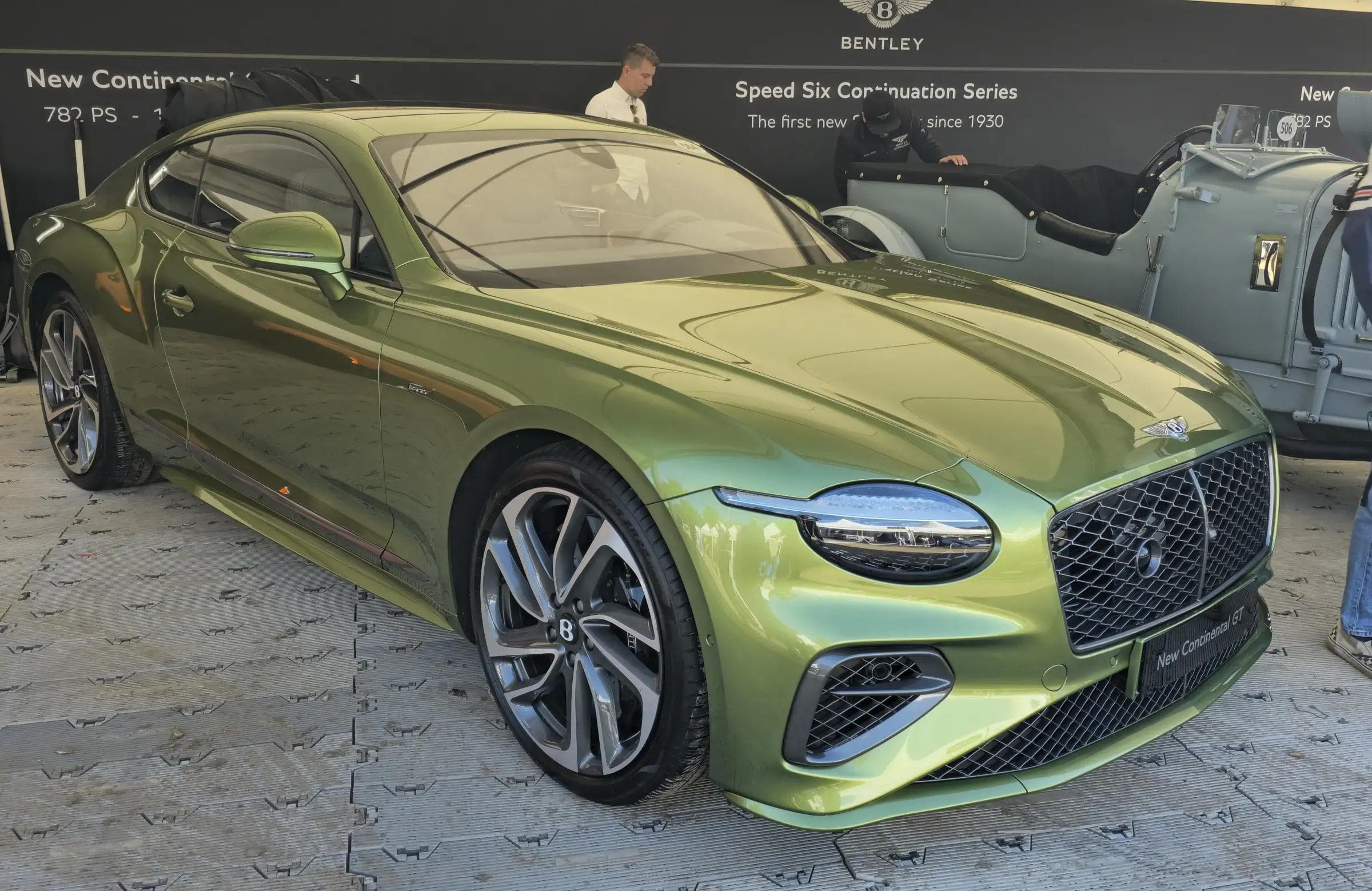
Bentley hand-built its last W12 engine in Crewe in April 2024, closing a twenty-one year run that began with the original Continental GT in 2003 and passed 100,000 units along the way. The engine that replaced it is not another combustion unit and not a pure electric drivetrain. It is a plug-in hybrid: a 4.0 litre twin-turbo V8 paired to a rear-axle electric motor, badged the Ultra Performance Hybrid and dropped into the new Continental GT Speed. The headline number is the part Crewe wants read closely. The hybrid makes 782 PS. The most powerful W12 Bentley ever sold in a series car made 659.
That inversion is the whole argument. For two decades the W12 was the reason a Continental cost what it cost, the mechanical signature buyers were paying for. Bentley has now buried it and delivered a replacement that is quicker to 60 miles per hour, torquier, and can run on the battery alone for everyday city driving. The car that ended the twelve-cylinder is faster than the twelve-cylinder. No Bentley customer trading up from a W12 GT to the hybrid GT Speed is giving up performance to do it.
The reflex read of Bentley in 2025 and 2026 is that the brand lost its electric nerve. It pushed its all-electric deadline from the end of this decade to 2035, then said in late 2025 it would keep selling hybrids until at least that date, with the first electric Bentley itself slipping from 2025 to the end of 2026. Read as an EV story, that is a retreat. Read correctly, it is not. The hybrid Continental is the product that bought Bentley the room to wait, and the wait is the rational move. The delayed EV is the headline. The 782 PS hybrid is the business.
The car that ended the twelve-cylinder is faster than the twelve-cylinder.
What did the hybrid actually replace, and how does it compare
Start with the engine that is gone. The W12 was a 6.0 litre twin-turbocharged twelve, hand-assembled in Crewe over roughly seven hours from 2,600 components, and 24 percent shorter than a conventional V12, which is what let it fit the Continental's hood line in the first place. In its final and most potent series form it made 659 PS. Its single most extreme version, reserved for the 18-car Mulliner Batur, was tuned to 750 PS and sold from around 1.65 million pounds. Bentley described that as the most powerful Bentley powertrain it had ever built. It held that title for a matter of months.
The Ultra Performance Hybrid that succeeded it makes 782 PS and 1,000 Nm of torque from the combination of a 600 PS V8 and a 190 PS electric motor, fed by a 25.9 kilowatt-hour battery. The GT Speed reaches 60 miles per hour in 3.1 seconds and tops out at 208 miles per hour. Those are not transition-era compromise numbers. On every metric a buyer cares about, the hybrid beats the engine it buried. The torque arrives lower, the acceleration is quicker, and the car will move through a city on electricity with the V8 idle.
The performance story is the reason the rest of the strategy holds together. A hybrid that asked customers to accept less than the W12 would have been a hard sell at this price. A hybrid that beats the W12 reframes the entire transition as an upgrade rather than a concession.
Why push the all-electric deadline from 2030 to 2035
Bentley's original Beyond100 plan, set out in 2020, committed the brand to an all-electric lineup by the end of the decade, with a new electric model arriving every year from 2025. In November 2024 the company renamed the plan Beyond100+ and moved the full-electric target to 2035. A year later, in November 2025, it went further and said it would keep offering hybrid models until at least 2035, with the first fully electric Bentley, a sub-five-metre luxury urban SUV, now arriving toward the end of 2026 and reaching customers during 2027. Chief executive Frank-Steffen Walliser was blunt about the reason. There is, in his words, not a lot of demand. He was speaking about electric-car appetite among Bentley's current buyers.
Head of research and development Matthias Rabe put the same logic from the product side: the company will produce plug-in hybrids as long as markets and customers demand it. That is not a brand losing its nerve. It is a brand reading a demand curve. At the price and volume Bentley operates in, building the wrong powertrain a year early is far more expensive than building the right one a year late.
The five-year slip also tracks the wider luxury-EV reality rather than running against it. The brands selling to the same buyer have spent 2025 and 2026 walking the same line, leaning on hybrids while the pure-electric flagship gets pushed right. The pattern repeats across the segment Bryant covers, from the questions hanging over Ferrari's first electric car to the way the broad market keeps separating from the trophy tier.

How do the 2025 numbers justify the wait
The 2025 financials show a company under real pressure that is still printing a profit. Bentley delivered 10,131 cars in 2025, down about 5 percent year on year, on revenue of 2.6 billion euros. Operating profit came in at 216 million euros, an 8.3 percent return on sales and a seventh consecutive profitable year. The pressure shows in the trajectory rather than the headline: operating profit fell 42 percent year on year, hit by United States tariffs, currency movement, weaker demand in China, and parent-company decisions at Volkswagen. Bentley also flagged roughly 275 roles at risk, about 6 percent of its workforce.
Set the powertrain decision against those numbers. A brand that delivers around 10,000 cars a year and watches operating profit fall 42 percent cannot afford to commit a clean-sheet electric platform to a demand level its own chief executive says is not there. The hybrid Continental keeps the highest-margin product in the lineup current and emissions-compliant, without surrendering performance, while the company waits for the electric demand curve to actually arrive. The richer model mix and the growth in bespoke Mulliner derivatives held revenue down only 1 percent even as units fell 5, which is the same value-over-volume logic that runs through the whole strategy.
What the delay protected is the thing Bentley sells: a powertrain a buyer wants, at a margin that funds the next one. What it cost is time and the optics of a public climb-down on a deadline the company set itself. Between those two, the financials make the choice obvious.

How does the hybrid pivot read against the rest of the segment
Bentley is not making this call in isolation, and that is the point. The luxury-performance field has spent the last two years discovering that the buyer who can afford a 200,000 dollar-plus car is, on average, the buyer least interested in plugging it in. The clearest live test of that proposition is Ferrari's first electric car and what its launch actually priced, where the market reaction said more about appetite for an electric flagship than any demand survey could. Porsche has run the same problem from the volume side, where the 911 held its value while the brand's profit collapsed as the EV-heavy parts of the range lagged.
Against that backdrop, the hybrid Continental is the most coherent answer in the segment. It does not ask the customer to choose. It gives them a V8 that is also, on demand, an electric car, and it does so without surrendering the performance numbers that justify the price. The same instinct that keeps Bentley building hybrids shows up at the very top of the range, where the brand's coachbuilt and limited work, the kind of strategy-by-scarcity that Alpina is now building its next decade around, keeps the highest-margin cars combustion-adjacent and bespoke. The full Bryant Automotive coverage tracks how each of these brands is sequencing the same transition.
The pattern is not confined to cars. The same buyer pool that is in no hurry to go electric is the one absorbing the rarest assets across the trophy economy, from the global superyacht order book to branded trophy property. In every case the read is the same. At this level, demand sets the timeline, not a corporate pledge, and the brands that price on scarcity get to wait.
The bottom line for buyers
The W12 is gone, and the car that ended it is faster than it was. The all-electric Bentley has slipped from 2030 to 2035 and beyond, with the first EV now arriving in 2027. Treat those as two facts in tension and the brand looks confused. Treat them as one decision and the logic is clean: build the powertrain the customer actually wants, fund the transition with it, and let the electric demand curve declare itself before betting the platform on it. For a buyer choosing today, the hybrid Continental GT Speed is not a placeholder for the EV that is late. It is the better car, and Bentley's own numbers say so. The Bryant Automotive desk holds the running read on how the segment sequences combustion, hybrid, and electric through the rest of the decade.